
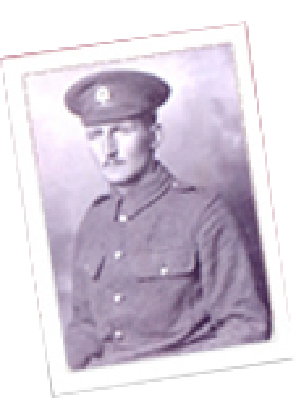
- First Name(s):RobertGeoffrey
- Surname:ASTON
- Service Number:1949
- Rank:
Private
- Conflict:WW1
- Service:Army
- Army Sector:Cavalry
- Corps:Imperial Yeomanry
- Regiment:Warwickshire Yeomanry
- Former Units:None
- Date of Death:11th April 1915
- Age At Death:22
- Place of Death:At sea
- Place of Burial:Commemorated on Hollybrook Memorial, Southampton, Hampshire, England.
- Place of Birth:Church Lench, Evesham, resident Evesham, enlisted Warwick
- Home Town:Unknown
- Casualty's Relatives:
Son of Enoch James and Marion Ada Aston, of Church Lench, Evesham, Worcestershire

ASTON Robert Geoffrey Is Named On These Memorials
Notes About The Memorial(s) Listed Above
Church Lench All Saints Church with the information 1 War. Yeo.
Further Information About ASTON Robert Geoffrey
Appears in the Worcester/Worcestershire Roll of Honour Book for army casualties located in Worcester Cathedral under Church Lench casualties.
The following information has been researched and transcribed by Alan Stephens:
Robert Geoffrey Aston was born in 1893, the son of Enoch and Marion Aston. His father was a farmer and baker but Robert is described on the 1911 census as an apprentice carpenter. With the outbreak of war he joined the Warwickshire Yeomanry. The 1st/1st Warwickshire Yeomanry was ordered to sail to the Middle East at the beginning of 1915 and embarked on the horse transport ship “Wayfarer” at Avonmouth. The ship was about 60 miles North-West of the Scilly Isles when it was torpedoed at 15.30hrs on Sunday 11th April 1915. The ship was struck on the port side with the engine room and boiler room flooded. Most of those on board were able to take to the lifeboats, however one boat capsized drowning three men. An hour later those in the lifeboats were transferred to the steamer S.S. Franfield. A few hours later with the “Wayfarer” still afloat Major Richardson, commander of the Yeomanry and Captain Cownie of the “Wayfarer” went back on board. They were able to save the life of a Private who had been left behind and had almost drowned in the hay hold. A nephew of Robert Aston has told me that the family had understood that Robert had been trampled to death by the horses and this is in line with contemporary accounts that Major Richardson and Captain Cownie found the body of another Private in the hay hold. Most of the Yeomanry were transferred to H.M.T. Newlyn and taken to Falmouth. However two officers and fifty-three men stayed on board as the “Wayfarer” was towed to Queenstown in Ireland where they disembarked 760 animals, only three horses had been lost, one of pneumonia and two of accidental causes.
Robert Aston’s nephew (also Robert Aston) has told me that he believed his uncle was buried in Ireland but I can find no record of this.
The following information relating to the burial place of Robert Aston has been kindly sent to me by Tom Burnell after assistance by Archivists, Brian and Stephen, of the Cork City and County Archives:
Robert Aston was buried in Old Church Cemetery, Cobh, County Cork, Ireland in Grave C. 24. 51 on the 22nd April 1915, the entry in the burial register recording him as ‘drowned’.
Footnote: The boat that sank the Wayfarer was U32 captained by Edgar von Spiegel Von Und Zu Peckelshein. On April 30th 1917 Peckelsheim engaged a Q-ship in a surface action in the English Channel and was captured. He spent the rest of the war as a POW. He died in 1965.
The following information has been researched by and is courtesy of Brian Hill:
Robert Aston was born and lived in Church Lench, near Evesham, the son of Enoch and Marion Aston. He was a carpenter and joined the Warwickshire Yeomanry in 1913.
The Warwickshire Yeomanry’s 763 Horses and mules with 6 Officers and 189 O.R.s sailed for Alexandria from Avonmouth on 10th April 1915 on board the transport “Wayfarer”. The main body of the Regiment were embarked on “Saturnia”.
At 2.15 pm on 11th April “Wayfarer” was torpedoed, leaving a hole of 800 sq. ft. in the side. Six holds were flooded. With only three losses the men were got away in boats and rescued by a small steamer “Framfield”. As by 4 pm “Wayfarer” had not sunk it was boarded by the Captain and C.O., and at 5.30 pm three Officers and 18 O. R.s., also boarded to take on the massive task of feeding and watering all the horses, whilst at any moment the ship could sink.
“Framfield” took “Wayfarer” in tow, averaging only one mile per hour so as to avoid straining the bulkheads. On April 13th two Admiralty tugs took over the tow, arriving in Queenstown, Ireland that evening, when the horses and mules were unloaded. Some were suffering from pneumonia as they had been up to their knees in water, but only three had died.
Robert Aston was found drowned in Wayfarer’s hay hold, having been on stable duty when the explosion took place.
If you have any information about ASTON Robert Geoffrey, please get in touch
Information AboutASTON Robert Geoffrey
Credits: Cathedral Roll of Honour books researched by Sandra Taylor.